Receivable Satellites

NOAA 15 / 18 / 19 Series Weather Satellites
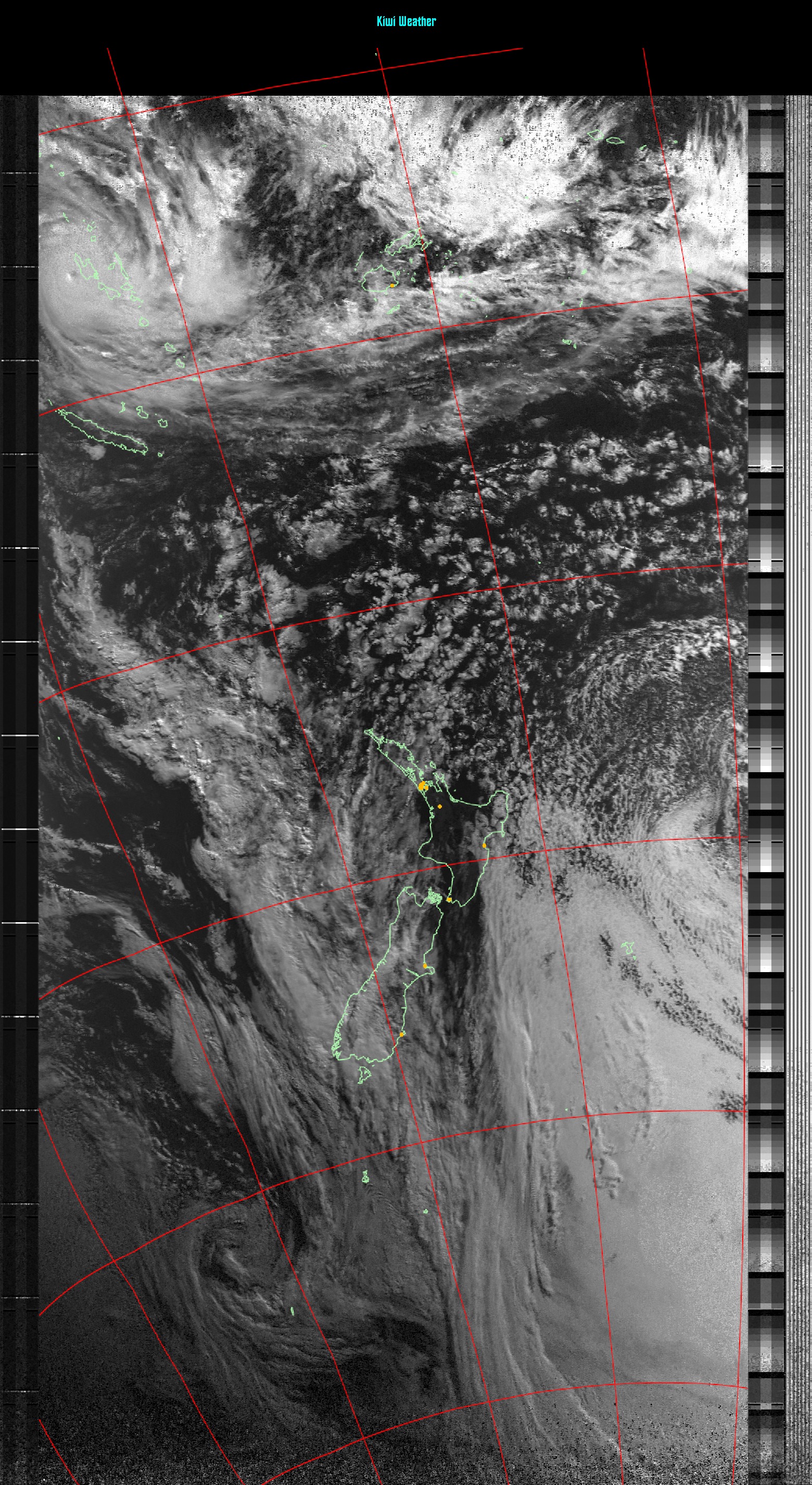
NOAA 18 Image
Click on image for a larger version
Or
Click here for the full size version (opens in a new window).

NOAA National Oceanic and Atmospheric Administration POES Satellites

General Information:

  • Passes overhead multiple times a day
  • Easiest satellites to receive
  • You can get something even if the signal is really weak
  • Analogue Signal

About this pass:

  • You can see Cyclone Harold, a category 5 cyclone, in the top left of the image.
  • The eye of the storm is clearly visible.
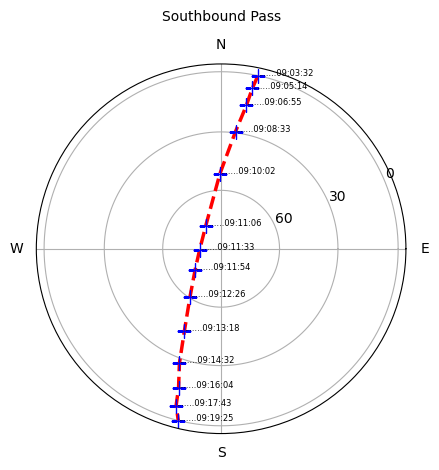
  • Max pass elevation - 79°
  • Pass start (NZST) - Mon 06 Apr 2020 09:03:32/li>
  • Pass end (NZST) - Mon 06 Apr 2020 09:19:25/li>
  • Pass start (UTC) - Sun 05 Apr 2020 21:03:32/li>
  • Pass end (UTC) - Sun 05 Apr 2020 21:19:25/li>
  • SDR type - RTL-SDR v3 (RTL2838UHIDIR)
  • Antenna - Quadrifilar Helicoidal antenna (137.6 MHz)
  • Hardware used - RTL-SDR FM Block, Nooelec NOAA Sawbird (LNA + Bandpass Filter)
Polar plot

Meteor-M Series Weather Satellites

Meteor-M 2 Image
Click on image for a larger version
Or
Click here for the full size version (opens in a new window).

Meteor-M2 & Meteor-M2-2

General Information:

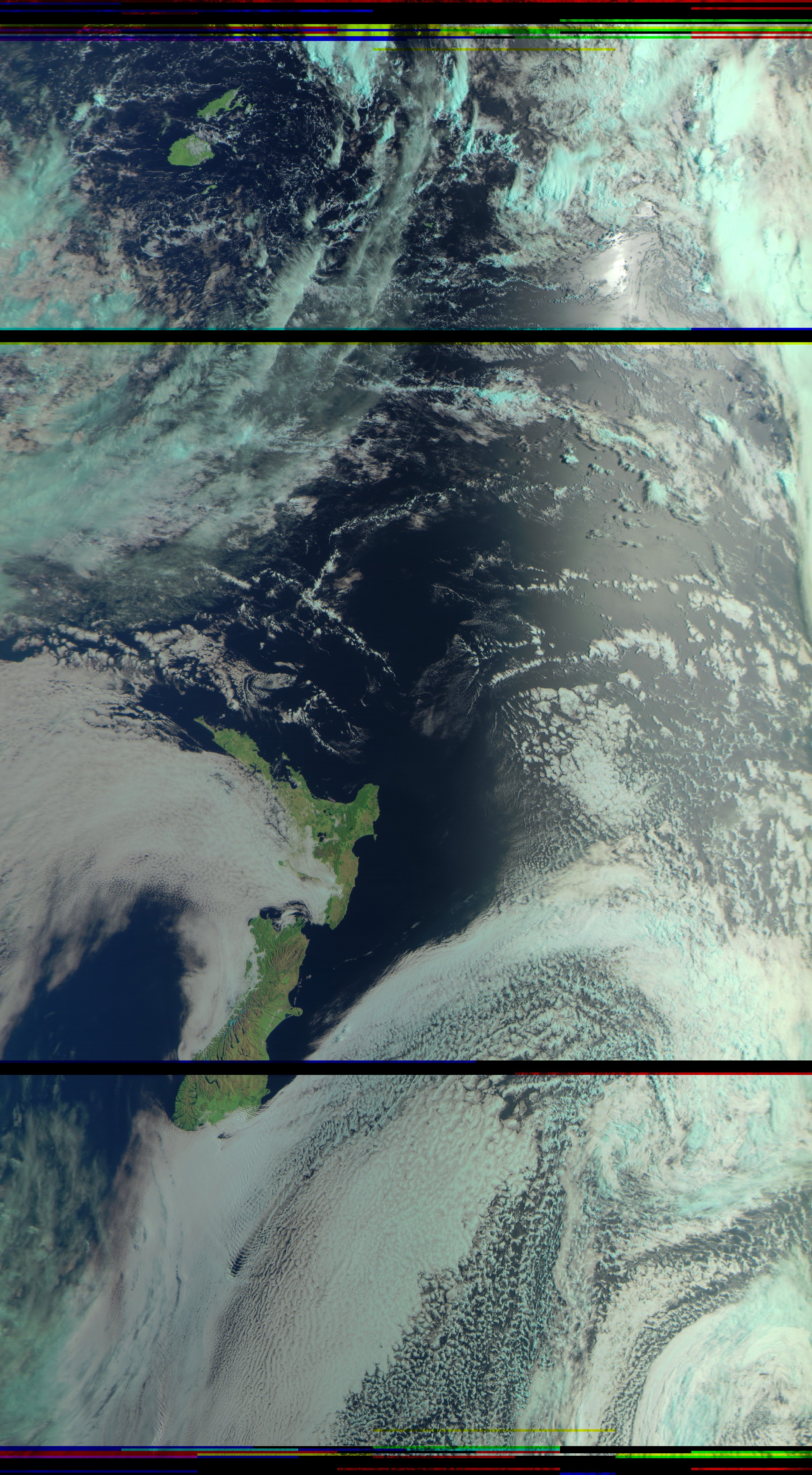
  • The pass on the left from Meteor-M 2 was received perfectly. However, the horizontal black lines you see in the decode are caused by buffer overflows in a code bug on the satellite itself.
  • These overflows occur when the satellite has received a certain amount of data (so more often over land than sea), and this typically happens around once every 6 minutes.
  • Meteor M2-2's LRPT was disabled because it was hit by a micrometeorite in 2019.

Pass Information:

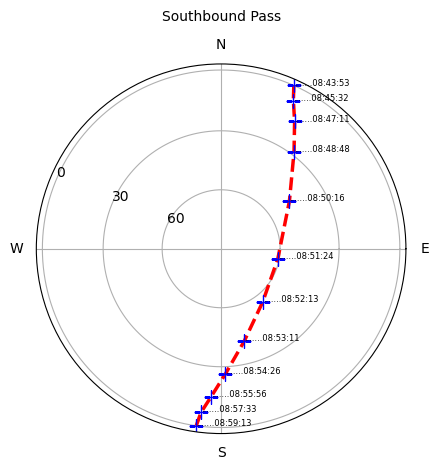
  • Max pass elevation - 62°
  • Pass start (NZDT) - Tue 11 Feb 2020 08:43:57
  • Pass end (NZDT) - Tue 11 Feb 2020 08:59:15
  • Pass start (UTC) - Mon 10 Feb 2020 19:43:57
  • Pass end (UTC) - Mon 10 Feb 2020 19:59:15
  • SDR type - RTL-SDR v3 (RTL2838UHIDIR)
  • Antenna - Quadrifilar Helicoidal antenna (137.6 MHz)
  • Frequency range - 135-140 MHz from bandpass filter
  • Modules - RTL-SDR FM Block, Nooelec NOAA Sawbird (LNA + Bandpass Filter)
Polar plot

ISS Zarya Module

ISS SSTV Image
Click on image for a larger version

ISSInternational Space Station Zarya Module

General Information:

  • The ISSInternational Space Station is a joint project between between five participating space agencies: NASA (United States), Roscosmos (Russia), JAXA (Japan), ESA (Europe), and CSA (Canada)
  • There have been crew living aboard continuously since 2nd November 2000
  • The ISS travels at an orbital speed of 8Km per second. That means it circles the entire planet once every 90 minutes!
  • The ISS is the largest manned object ever assembled in space, requiring multiple launches from Russian and American satellite launchers.
  • It is the single most expensive object ever built. The cost of the ISS has been estimated at over $120 billion!

Pass Information:

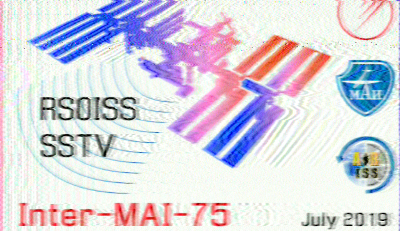
  • Occasionally broadcasts SSTVSlow Scan TeleVision as part of "events" on frequency 145.8MHz
  • SSTV is relatively straightforward to receive, although the ISS only broadcasts on an infrequent basis.
  • More info about upcoming events can be found on the Satellite Status page.